

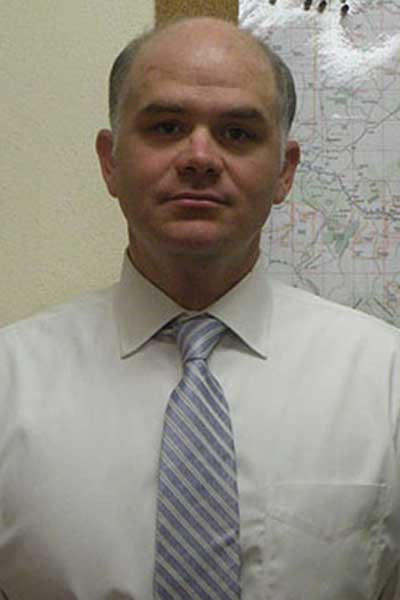
Dr. Marshall Swafford, assistant professor of career technical education, is a skier.
He skied in Whistler Mountain before it was used in the 2010 Winter Olympics in Vancouver.
He has a bachelor's in agriculture education from Northwest Missouri State University, a master's in agriculture education from University of Missouri-Columbia, and a doctorate in human resource education and workforce development from Louisiana State University.
Before becoming a professor he was a high school agriculture teacher and a sales agronomist. He lived in Iowa before moving to New Mexico for his current position at Eastern.
Dr. Swafford grew up in northwest Missouri in a small town called Savanah.
"It's about 60 miles north of Kansas City. It really wasn't that bad of a place. It's a small community. There was a town of about 70,000 just south of us about 10 miles. For leading a rather sheltered life as a child, I pretty much had everything I needed in about 20 minutes," said Dr. Swafford.
He grew up in an agricultural environment and family which is what led him to pursue his degree in agriculture.
"I am the son of a high school ag teacher. I just grew up in it," said Dr. Swafford, "My dad's twin brother is an ag teacher, my youngest brother was an ag teacher, my youngest brother's wife's dad is an ag teacher, my ex-wife was an ag teacher, so I lived it."
He has had many mentors and considers himself lucky for being surrounded by experienced agricultural teachers when he began teaching. "I always looked up to the guys who had taught for 20-30 years."
The people he considers mentors include his father, his uncle, and an old agriculture teacher friend named Chuck Wilson.
"I was pretty lucky growing up in a profession in which I knew a lot of people in my little circle of the world. They always allowed me to tap into their knowledge so that I could become a better teacher. Without guys like my dad, my uncle, and guys like Chuck, I wouldn't be where I am today," Dr. Swafford explained.
"I am the son of a high school ag teacher. I just grew up in it," said Dr. Swafford, "My dad's twin brother is an ag teacher, my youngest brother was an ag teacher, my youngest brother's wife's dad is an ag teacher, my ex-wife was an ag teacher, so I lived it."
He has had many mentors and considers himself lucky for being surrounded by experienced agricultural teachers when he began teaching. "I always looked up to the guys who had taught for 20-30 years."
The people he considers mentors include his father, his uncle, and an old agriculture teacher friend named Chuck Wilson.
"I was pretty lucky growing up in a profession in which I knew a lot of people in my little circle of the world. They always allowed me to tap into their knowledge so that I could become a better teacher. Without guys like my dad, my uncle, and guys like Chuck, I wouldn't be where I am today," Dr. Swafford explained.
One of Dr. Swafford's favorite aspects about the transition from high school teacher to university professor is instead of preparing students to go to college he "gets to teach college students to prepare them to be professionals."
He enjoys seeing their attitude changes from when they start to when they can apply knowledge learned in the classroom to real life situations.
He likes Portales because where he "grew up where it was muggy in the summer and humid. Down here it's great. I don't sweat immediately when I walk out of the house; it takes a little bit longer."
He likes that people have been encouraging and easy to work with at Eastern.
"I am fortunate our departmental secretary is pretty great. She's helped clean up a few of my messes here and if it wasn't for people like that, cleaning up my messes, I'd be in pretty rough shape," said Dr. Swafford.
He is a "die-hard" college football fan--his teams being the University of Missouri and Louisiana State University because he has degrees from them.
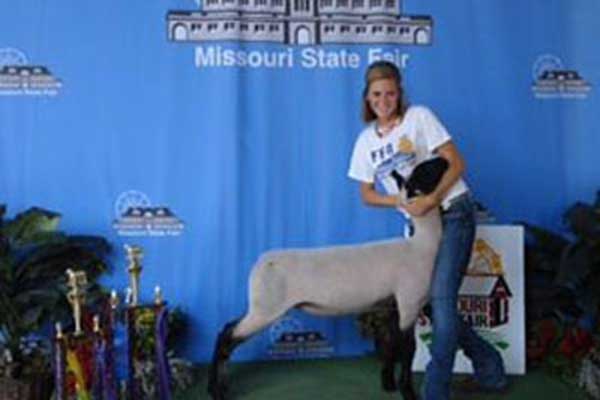
He also enjoys showing livestock. "I got into showing hogs in high school and now have become kind of a sheep guy," explained Dr. Swafford. He goes back to Missouri during the summer and works with sheep. He has had several winning sheep in the recent past.
"You have to start out with a good sheep to begin with. A lot of miles have to be driven. I've driven from Minnesota to south Texas to find sheep. It takes several hours a day to make them right through the course of the summer. I could write a whole book on everything that goes into showing sheep," explained Dr. Swafford.