Where Code Takes Root
Where Code Takes Root
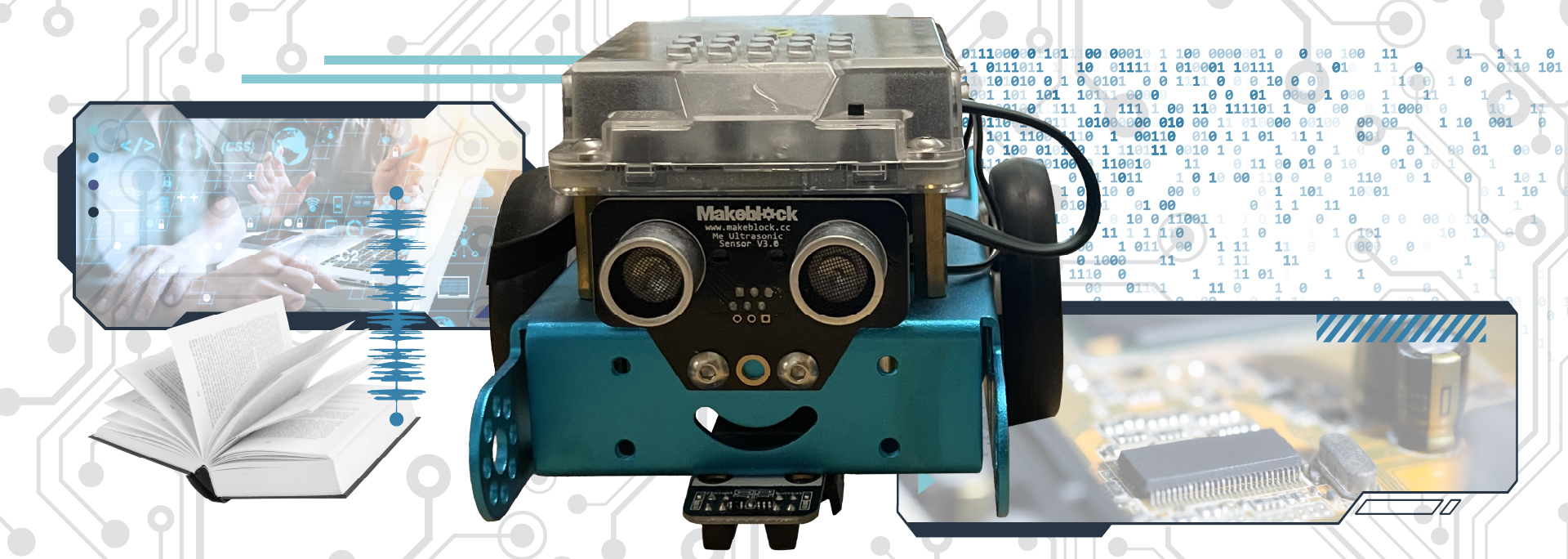
In a quiet office at the edge of campus, a palm-sized robot sits motionless, its metal frame catching light between the shadows of thick programming manuals. Compact and precise, it's a vessel ready for the commands written in its code. It is a small seed of possibility planted with ingenious minds and nurtured with patient hands. This unassuming machine represents something more than its function. Here, curiosity takes root, and what begins as lines of code grow into confidence. Assistant Professor of Computer Science, Dr. Edgar Eduardo Ceh-Varela smiles gently while looking at the robot. "We programmed this with the girls," he said, referring to the students in Eastern New Mexico University's Girls Who Code club. "I wanted them to see that they could do it."
Like the robot, Ceh-Varela's path reflects a renewal that unfolds through quiet decisions programmed by tenacity and intention. In Mérida, Mexico, where centuries-old traditions were colliding with rapidly changing technology, Ceh-Varela taught Information Technology (IT) and engineering at the Universidad Tecnológica Metropolitana, guiding students with enthusiasm for the changing world. Beyond the classroom, he took on side projects, training companies eager to embrace new tools and modernize their work. He spent six years coordinating Microsoft infrastructure for the state government, where every solution demanded skill in the face of limited resources. Whether in industry or academia, each role Ceh-Varela tended to enriched the soil of his experience.
Teaching wasn't just a job. It became a lens through which he saw the deeper purpose of technology.
Amid the rapid pace of emerging technologies and ever-shifting demands, Ceh-Varela kept learning, layering new understanding into the foundation of his work. As his curiosity shifted, it wasn't enough to simply use existing tools. He wanted to help others understand them as well as he did. Teaching wasn't just a job. It became a lens through which he saw the deeper purpose of technology.
"I was learning all the time," he said, his eyes reflecting on the long nights spent balancing a full workload with his studies. "But teaching helped me understand the work more deeply."
Moving between the fast-paced problem solving of government IT and the reflective and methodical work of academia refined his understanding. While working full time, he pursued his master's and later his doctorate. His relationship with technology evolved, becoming less about how to use tools already made and more about how to create new tools from scratch. The tools he shifted his focus to were not just for himself but for others to learn and build alongside him.
"In government, especially in Mexico, you don't have a lot of resources," he says. "So, it's like, 'Here's the problem. Good luck.'" Scarcity forced his creativity. Every solution he wanted to find demanded collaboration, precision, and patience.
For Ceh-Varela, it was a leap into unfamiliar territory when he moved to New Mexico State University (NMSU) to pursue his Ph.D. in computer science. His mind brought him big dreams, and his conviction kept him going. He did not want to give up. "Looking back, I'm proud that I can't ask myself, 'What if there's more?'" he said. "That was one of the reasons I came here, to find out."
At NMSU, Ceh-Varela worked as a research and teaching assistant in the Data Mining Lab, an environment that challenged him to deepen both his technical expertise and his ability to mentor others. His research explored recommended systems, natural language processing, and applied machine learning, fields that required precision, creativity, and constant adaptation. Ceh-Varela had been teaching for years, but it was during his Ph.D. that he began to see how instruction could be more than a transfer of knowledge. He realized teaching could be an open space for experimentation and a place where curiosity was tended to with the same patience and care that allows ideas to take root.
"I was one of the last generations to study computer science without the internet," he said with a smile. "Now I know my students need those tools, but I also know if you didn't have them, you could open a book and still learn what you need."
Enriched by the understanding that technology's real potential blooms when people are invited to explore it, Ceh-Varela's last semester opened doors he hadn't expected. What began as an academic pursuit became entrenched in the soft, rich soil of exploration. Like the robot on his desk, his skills and purpose were taking the shape of deep, well-fed roots.
At ENMU, Ceh-Varela continues to carry his mindset of cultivating an environment of welcome and growth. He works to make our campus a place where students who arrive with uncertainties leave with green buds of confidence. His students come to him through formal courses, research, and community spaces like Girls Who Code. In each space, his students are given an invitation to try, to test, and to build. Many eventually find their way into the Emerging Machine-learning Modeling and Analysis (EMMA) Lab, where remote and in-person learners test ideas, make mistakes, and try again.
He works to make our campus a place where students who arrive with uncertainties leave with green buds of confidence.
Noticing where confidence could sprout, he offered a low-pressure invitation with no strings attached to a student who was hesitant about research. With that patient nudge, the student's academic trajectory shifted. They earned a scholarship, placed second at the New Mexico Research Symposium, and, eventually, went on to pursue a Ph.D.
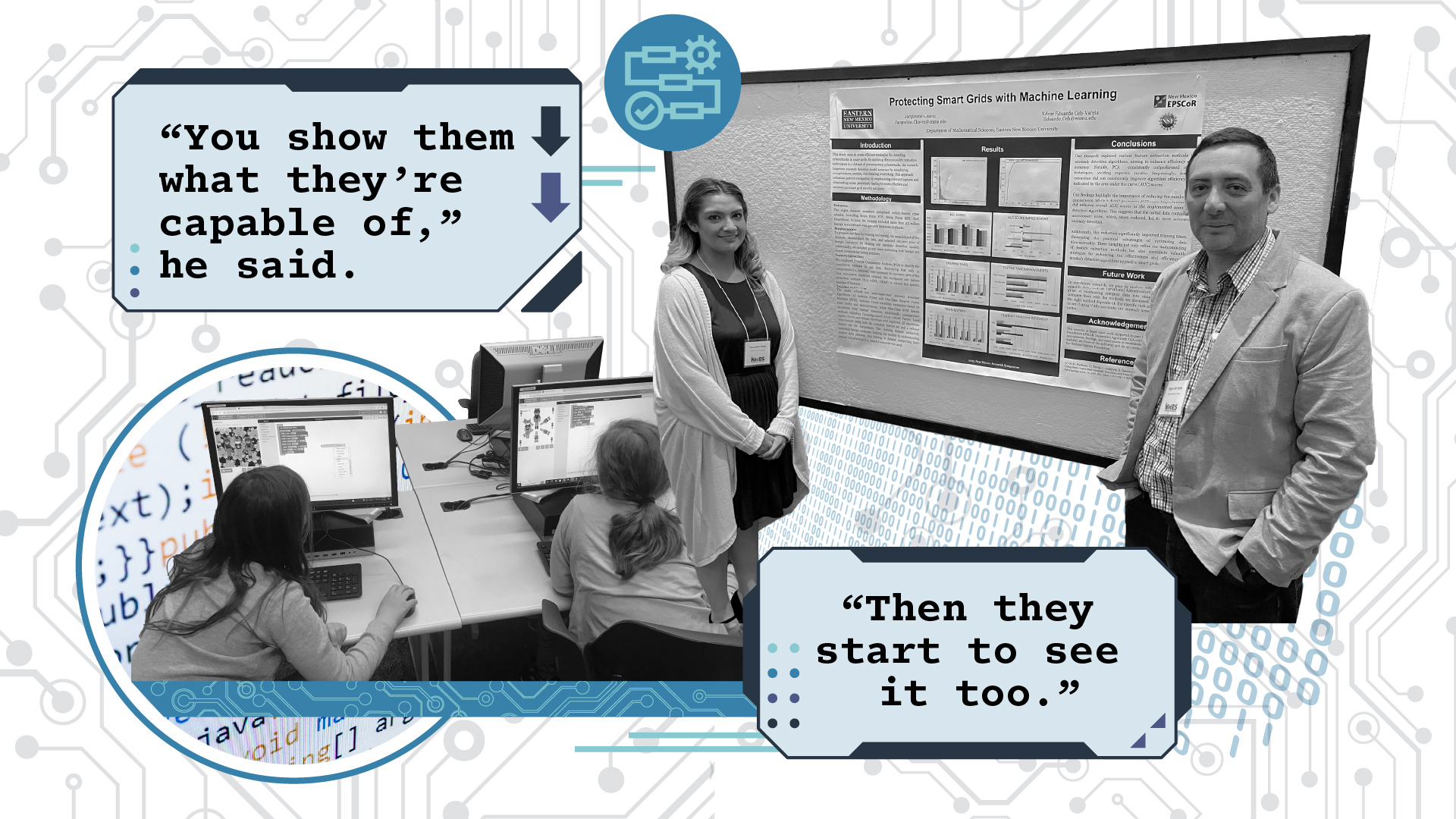
Rather than assigning reading for another student who was struggling, Ceh-Varela designed a programming challenge that turned a real-world problem into a game. This student, interested in video games but unsure where to begin, needed reinforcement learning, and Ceh-Varela was able to adjust his teaching method to the needs of his student. "When they start, many of my students think computer science is all about programming, but computer science is about problem solving. Programming is just a tool," he explained. To help this student, Ceh-Varela dove into new material, researching, coding examples, and learning alongside his student. "That is what I try to do. I listen first and see how I can help them with their projects and ideas," he says humbly. Step by step, the student uncovered each facet of the problem, and in the process, curiosity branched into confidence. In these moments, Ceh-Varela is more than an advisor. He listens, adapts, and creates room for growth. "You show them what they're capable of," he said. "Then they start to see it too."
In the hands of a teacher, futures can take root through one simple invitation: Come and see what you're capable of.
This year, Ceh-Varela was honored with the 2025 New Mexico Established Program to Stimulate Competitive Research (EPSCoR) Outstanding Mentor Award, recognized both for the research opportunities he has opened and the way he nurtures inclusive, educational environments where students can explore, experiment, and grow. The review committee praised his ability to meet students where they are and continually foster a sense of belonging that allows curiosity to flourish.
But the clearest measure of his impact came from one of the students who nominated him: "His mentorship has been transformative, not only advancing my academic and professional journey but inspiring me to someday offer the same encouragement and belief to others."
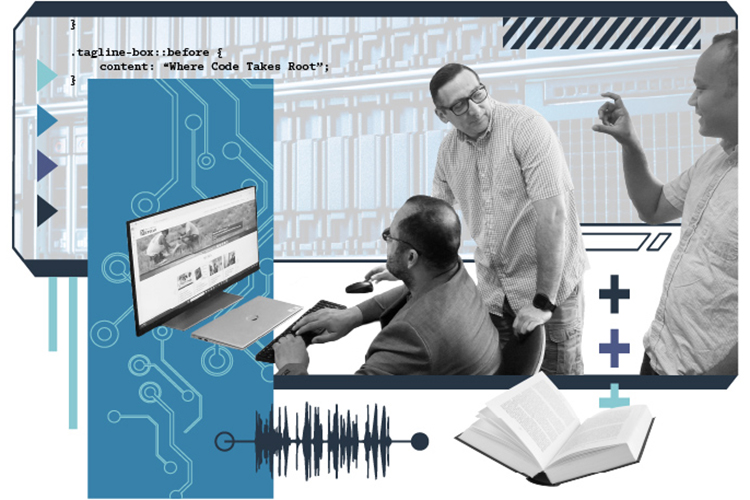
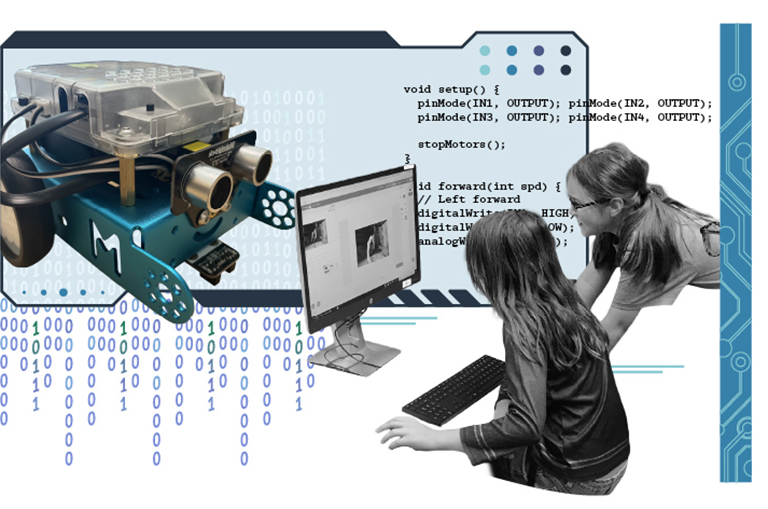
In the Girls Who Code club, his work reaches even the youngest learners. Girls, ages 8 to 11, gather after school to tinker, test, and imagine with Ceh-Varela's support and exploratory lab. Together, he and the girls write simple codes and bring small robots to life. He creates a space where discovering technology isn't distant or out of reach but something his students can shape with their own hands and minds. For Ceh-Varela, this exploration is never only about teaching and coding, but about empowering his students to follow paths that they might not yet see themselves in.
In his office, as the sun shifts across the desk and casts new shadows on the little robot, the quiet power of transformation is clear. Like roots spreading below the surface, Ceh-Varela's work is slow and intentional, preparing the ground for the emergence and the bloom of his students. Not all transformations are dramatic and loud; some rebirths begin in quiet rooms, where students gather around low-key machines in the glow of patient guidance. In that light, their confidence begins to bloom. In the quiet that inspires confidence, Ceh-Varela does his best work. It is the same space where patience meets intention, and futures push through their topsoil, ready to grow.
In the hands of a teacher, futures can take root through one simple invitation: Come and see what you’re capable of.