
Pillars of Success
Pillars of Success
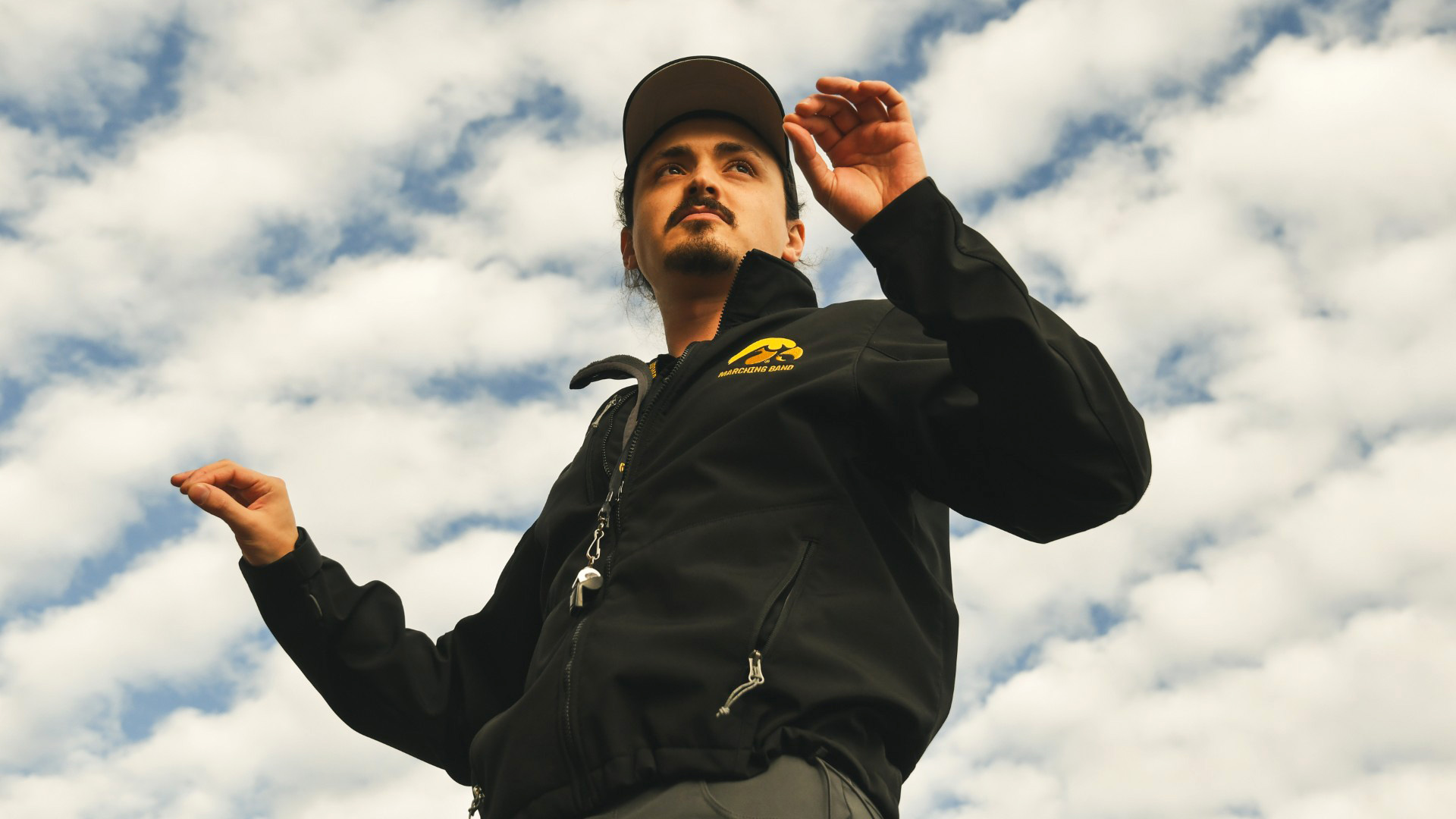
Education is often described as learning new skills, but in music, education can be more accurately defined as a refinement of skills that the student already has. Mastery occurs when a student stops merely following instructions and begins to internalize the rhythms and theories they already understand. Feeling the notes they play in their fingertips, waiting for the moment to let it out.

For Eastern New Mexico University alum Ignacio "Nacho" Pérez (BME 25), refining the relationship between himself and his instrument paved the way for a successful audition at the University of Iowa Master's program. There, he secured a graduate teaching assistantship, a trajectory he credits to the discipline and philosophy he forged during his time at ENMU.
Pérez's professional music life began during his junior year of high school. By then, years of middle and high school band had given him a solid technical foundation on the trumpet, and his playing had settled into a comfortable routine. He started private lessons with Dr. Sidney Shuler, associate professor of Music at ENMU. For Pérez, the lessons exposed a deeper world of fundamentals, sound, and musicianship that extended far beyond what he had encountered in school ensembles. "I realized how little I actually knew about the world of music," he said. "There was so much more to explore."
What began as memorable axioms dropped during lessons eventually merged with deeper reflections on discipline and the demands of musicianship. Over time, these axioms formed a rigorous framework of standards that Pérez carries as a permanent internal compass. Pérez's experience led him to define four pillars that have structured his approach to studying, teaching, and performing music:
The Floor and the Ceiling
"Fundamentals are what you fall back on when everything else fails. Raise your floor so that if the ceiling comes down there's less of a crash," Pérez said. He explained that in moments of pressure, performers rarely rise to the occasion; they fall back on the habits built in the practice room. To raise the baseline, Pérez employs a "sound-first" approach, prioritizing the development of a consistent, professional tone before tackling a complex repertoire.
The Competitive Edge
"There's always somebody willing to do what you're not," Pérez treats this as a reminder to maintain the integrity of his daily routine. "To loosely quote Dr. Shuler: 'I have never felt bad after taking time to get something done. I have felt bad after not.'" Pérez maintains his edge by meticulously scheduling his weeks to stay accountable, viewing discipline as the barrier between music as a hobby and a career. For him, motivation "comes from doing, not waiting for things to happen on their own."
Objective Practice
"The level of your playing does not determine your worth as a person." He described the goal of practice as learning to "perceive without judging," allowing a musician to focus on solving a problem rather than reacting to it. "Practicing can be frustrating," Pérez admitted, but by separating his identity from his technical output, he can return to the instrument with the clarity needed to solve problems rather than letting the mistake play repeatedly in his mind.
Community
"Community is important for fostering success. Rising tides raise all boats," Pérez recalled. For many undergraduates, peers are the primary support system, and in some programs, competition erodes community. At ENMU, Shuler made it a point to remind the trumpet studio to support one another. Pérez learned the value of encouraging colleagues to get together for communal warm-ups and fundamental routines. He says, "having others affirm that you belong in the group is essential, especially in a field that can feel intimidating, exclusionary, or competitive."
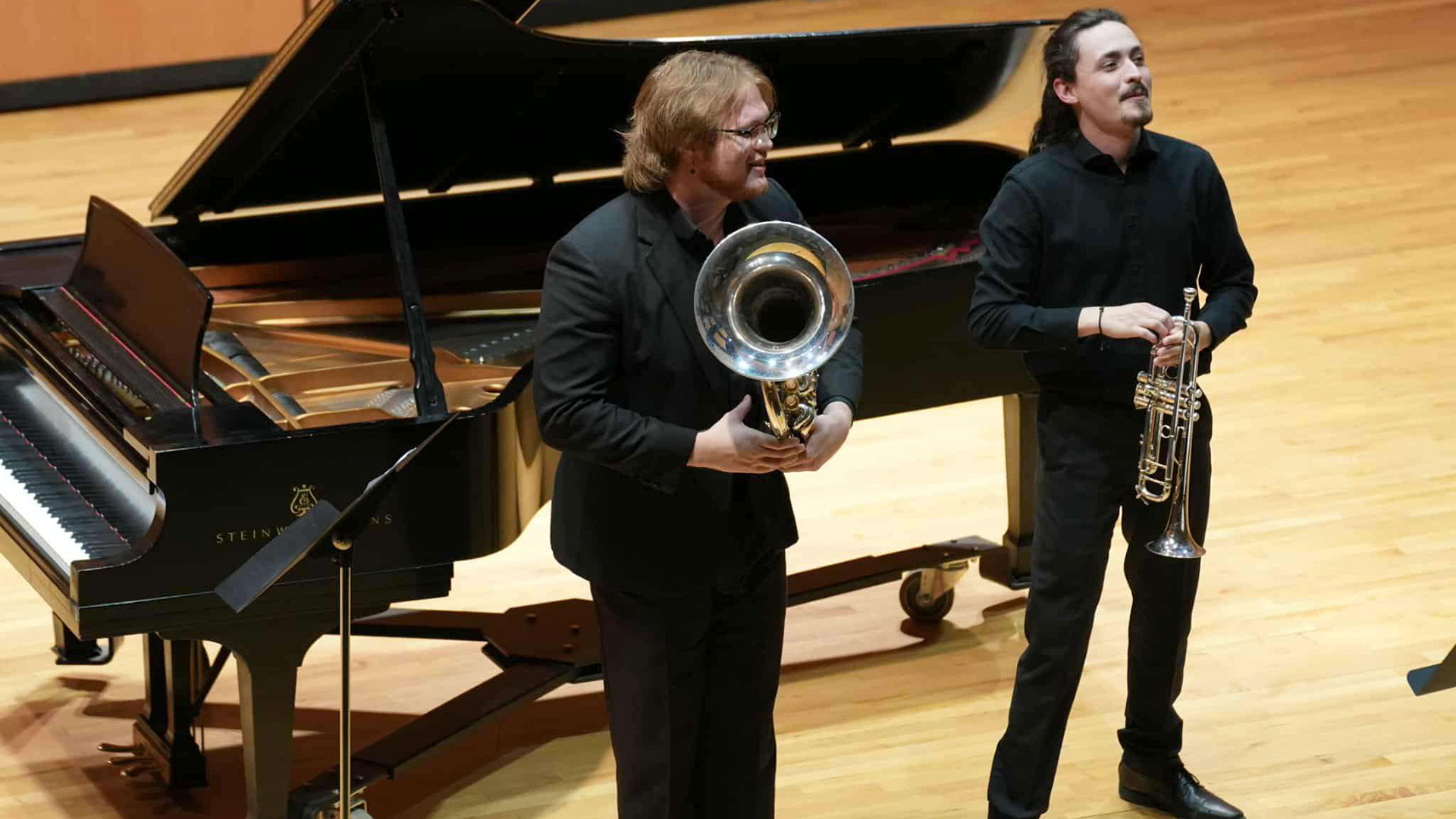
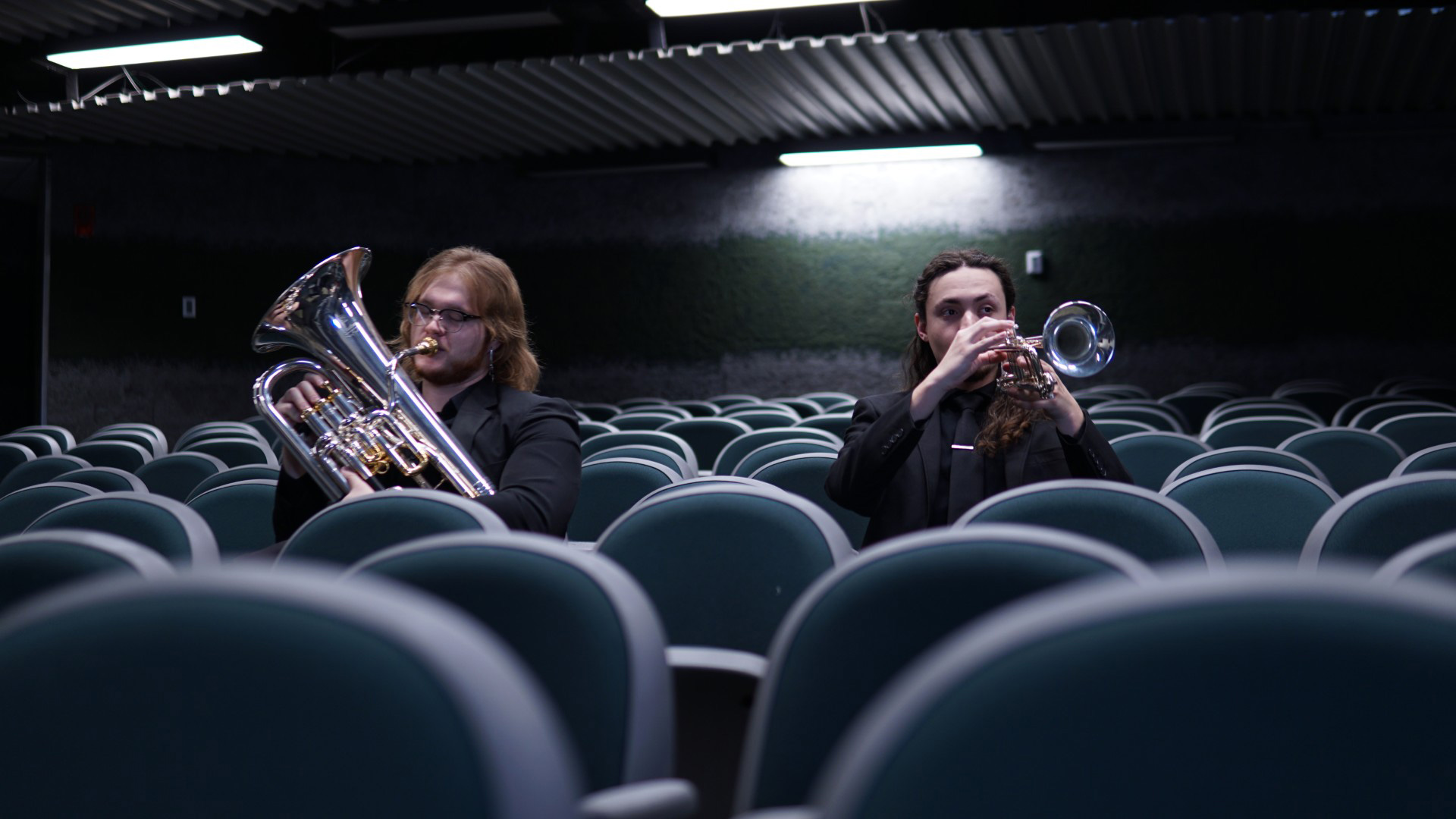
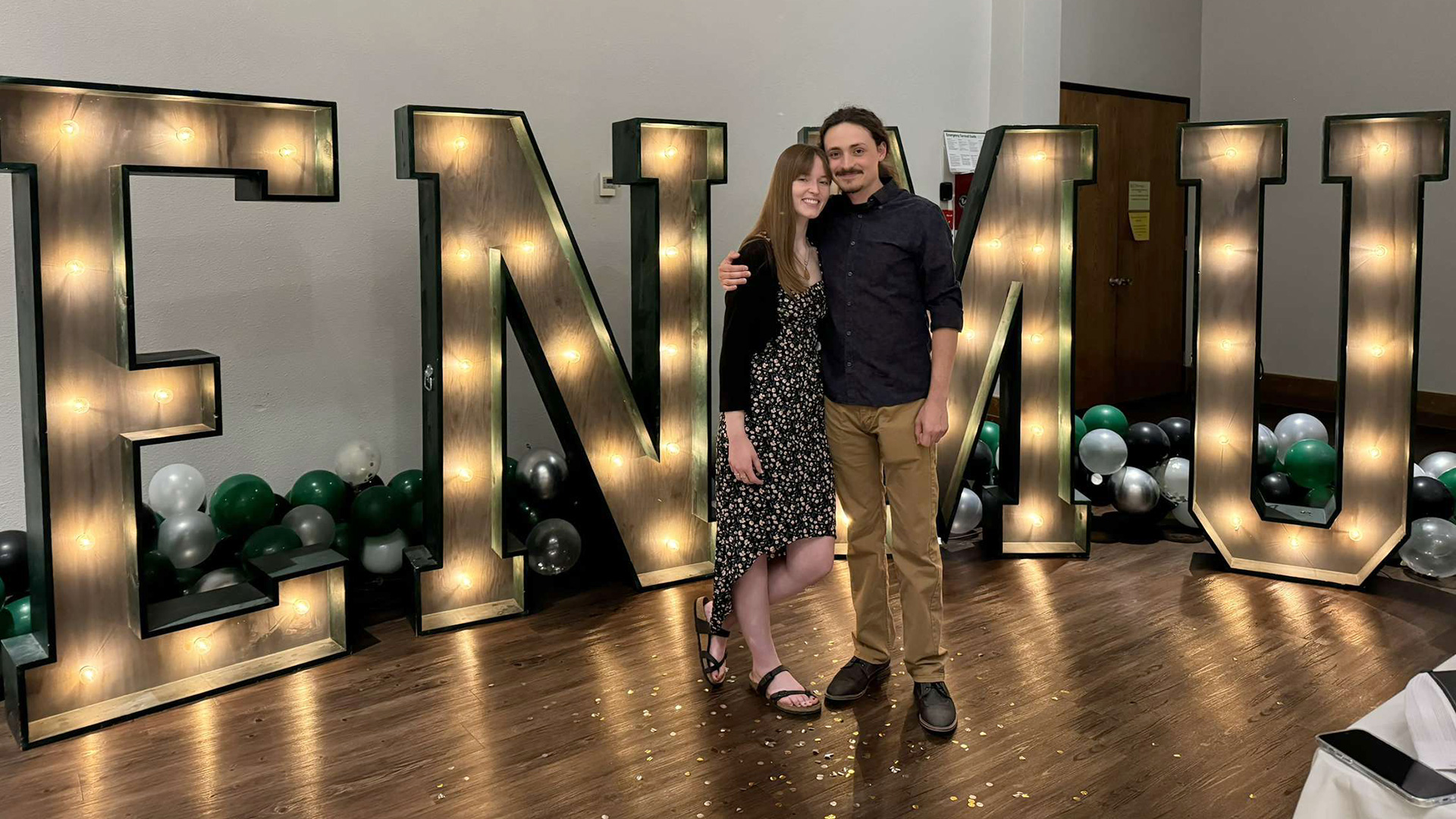

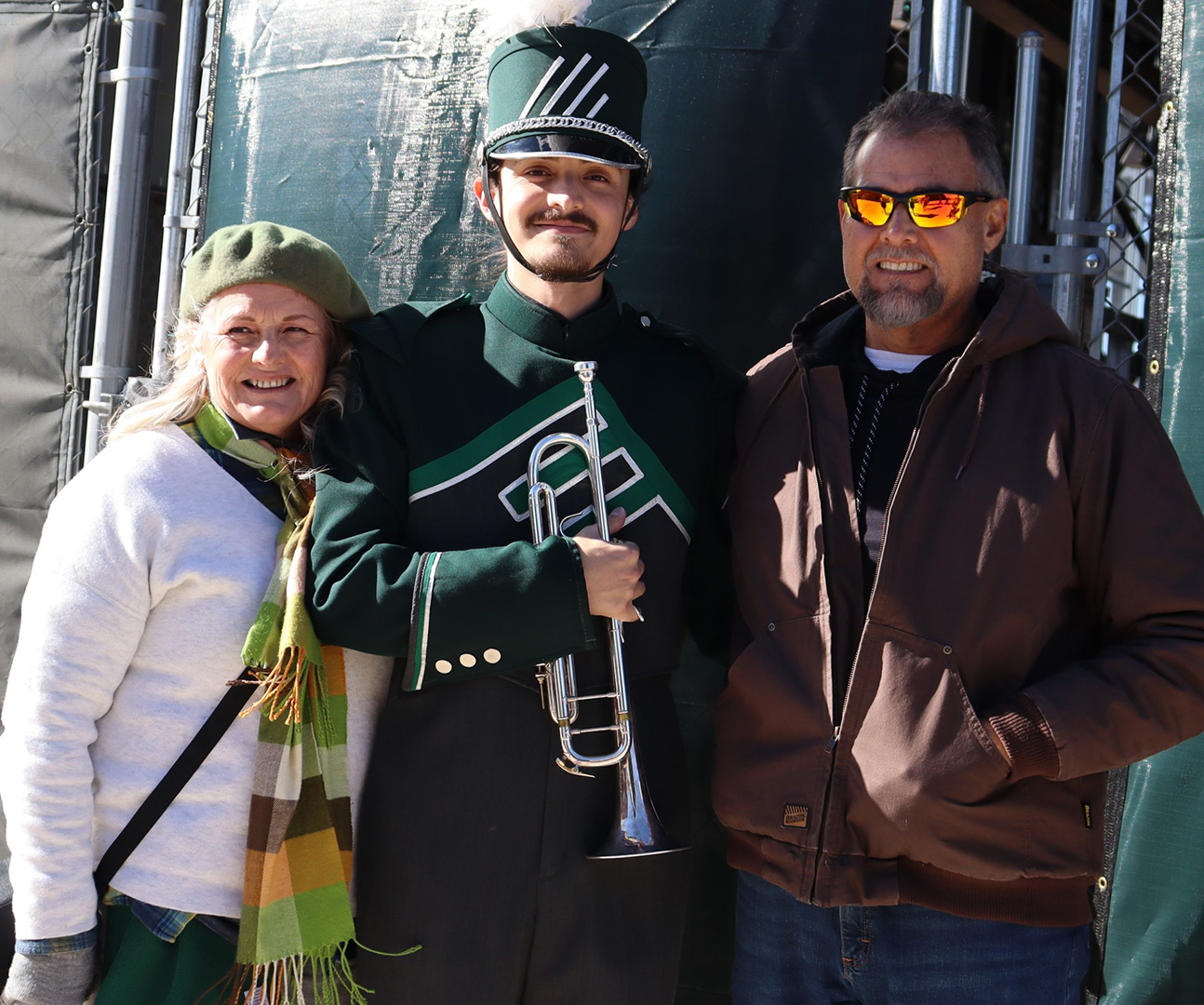
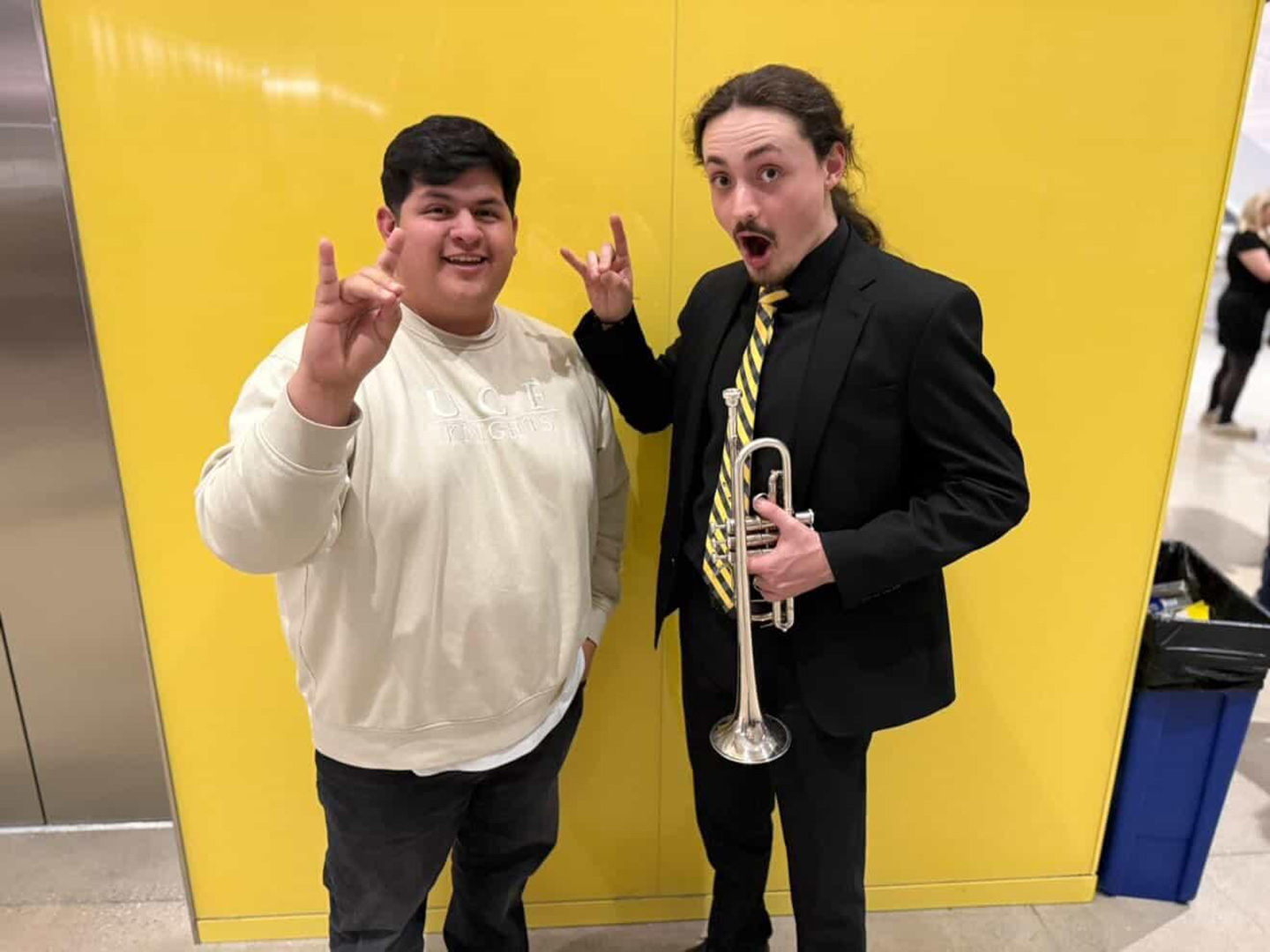
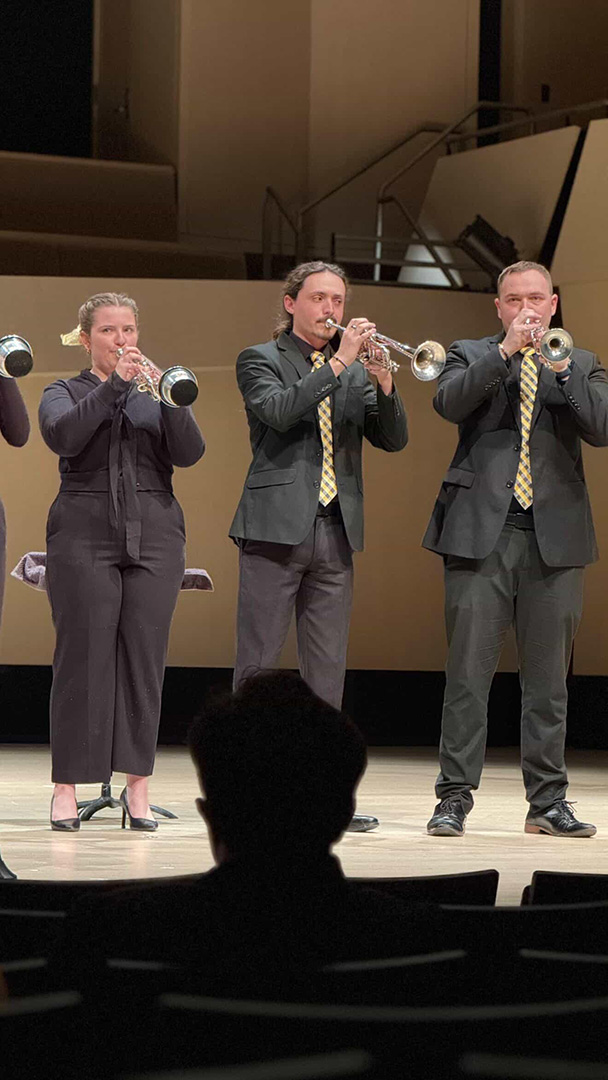
These pillars that Pérez learned from Shuler reflect the broader culture of ENMU's band program. Whether performing in the Wind Symphony, the Symphonic Band, the Greyhound Sound Marching Band (GSMB), or one of the smaller chamber ensembles, ENMU students operate within a shared philosophy that the program calls System and Spirit. This environment shaped the way Pérez approached leadership. While his growth as a mentor developed gradually, a noticeable shift occurred during his upperclassman years. "Before having so much experience, I was very blunt, cold, and sometimes conceited," he said. "I realized that I hated learning from people who taught in that manner. As a leader, my job is not to react emotionally to the things that are going wrong, but rather to work with others to find a solution."

Pérez's understanding of leadership reached a defining moment during the inaugural national marching competition 'For Whom the Bell Tolls', Metallica's annual marching band competition. Leveraging his familiarity with Metallica's music, Pérez worked alongside student leaders to shape the music and show. As a trumpet section leader and the bass guitar soloist, he contributed to the stylistic interpretation and collective energy that defined the Greyhound Sound's Metallica cover performance. When ENMU was announced as the winner of the Division II category, Pérez said he was in awe. "I felt validated in my excitement about Metallica and their music … the buy-in from the GSMB was excellent, and I will always be grateful for that marching season."
After graduating in May 2025, Pérez joined the University of Iowa's graduate program in trumpet performance and literature, where he serves as a teaching assistant for the Hawkeye Marching Band. "I don't know if I ever questioned whether this was my path," Pérez said, "But I did wonder if I was capable of succeeding." Now studying under Professor Michael Gause and Dr. Eric Bush in Iowa City, Pérez continues to refine the foundation he developed at Eastern.
And even though Pérez is teaching students of his own, he still thinks back to his time at Eastern. "Shuler's voice is the one I often hear in my head when judging my playing or working on fundamentals," he said. "His guidance and teachings ultimately shaped the way I think." Whether playing the trumpet or the bass guitar, Pérez finds himself turning to the core standards that he learned from Shuler and his community at ENMU.